
丁钰洋 | YUYANG DING
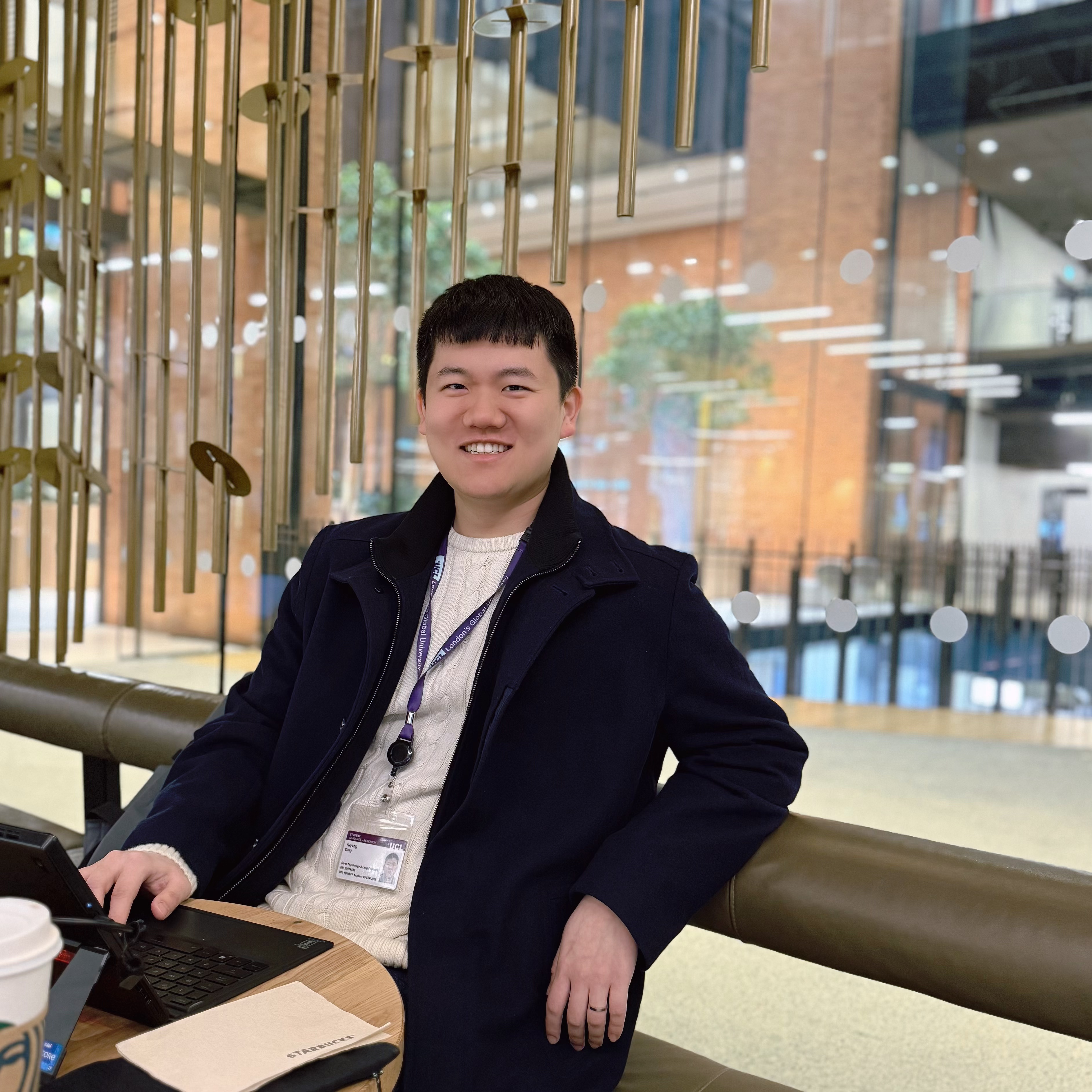
Hi there, I'm a PhD candidate in Experimental Psychology at UCL.
Photo taken by Tim Mossholder
Research
My current research focuses on the psychology and cognition basis of financial decision making.
Specifically, I investigate investor behaviour through controlled experiments. I leverage computational modelling (e.g., Drift Diffusion Model) to uncover the cognitive basis of individual financial decisions.
Below are some of the research projects I am currently working on.
Revisit the Disposition Effect under Knightian Uncertainty
The Disposition Effect (DE) is one of the most stable and widely discussed "behavioural biases" in the field of behavioural finance. In Statman and Shefrin's (1985) original paper, they use the term DE to describe such a pattern: "investors sell the winner too early and ride the losers for too long".
Existing works on DE mostly rely on the prospect theory and consider the decision-making process behind DE a risk choice task (where the probability and possibility of the outcomes are explicitly described, such as the gamble tasks in Kahneman and Tversky, 1970). We revisit the DE under different situations: certain risks vs. uncertainty (we are referring to Knightian uncertainty, where risks are those random outcomes that can be accurately measured by probability, while uncertainty refers to situations where such probabilities are not available) using our novel real-time trading paradigm.
We found that DE only exists in the situation of uncertainty and can be reversed when the risks are explicitly described. Using the hierarchical shifted Wald models, we found that such difference is associated with the difference in the information process efficiency.
Y., Ding, M., Speekenbrink.(under review). The Disposition Effectt under Uncertainty: An Information Processing Perspective, Journal of Behavioral Decision Making. Preprint available at https://papers.ssrn.com/sol3/papers.cfm?abstract_id=6873420
Contrast the Perceptual and Financial Decision-Making
Consider the following task: there are two urns with green and red balls, there are 40 green balls and 60 red balls in one urn and 60 green balls and 40 red balls in the other. An experimenter continuously draws balls from an urn and the participant's task is to figure out whether this urn is the green-dominated one or the red-dominated one.
Real life financial decision-making (e.g., stock investment) shares mostly the same perception with such a perceptual decision-making task. Then, the question is: if such tasks are equivalent, how and why do people perform differently in these tasks?
We compared the participants' behaviour and cognition while facing two similar real-time perceptual decision-making tasks with almost everything the same except for the scenarios.
We found the financial choices were significantly slower and less accurate than the perceptual choices. Computational models reveal asymmetrical information processing efficiency in buying vs. selling but not in detecting upward trends vs. downward trends.
Y., Ding, D., Goncalves, M., Speekenbrink. (in prep.). What Drives Poor Financial Decisions? The Role of Payoff Structure
Y., Ding, D., Goncalves, M., Speekenbrink. (2025). Watch out for Bears: Do People Behave Differently in Perceptual and Financial Decisions? CogSci 2025, Cognitive Science Society
Stock Price Chart and Regret
Stock price charts are arguably the most common visual representation of financial data. People (including me) make financial decisions based on these charts without doubting the necessity of such visual aids.
Leveraging Oprea et al. (2009)'s optimal stopping framework, we investigate whether presenting stock price charts really helps people make better financial decisions. We found that the stock price chart result in stronger regret by making peak prices visually salient, and such regret leads to systematically slower decisions.
Y., Ding, D., Goncalves, M., Speekenbrink. (in prep.). When Regret Helps: A Laboratory Investigation of the Effect of Graphical Representation on Financial Decision-Making
Curriculum Vitae
Summary
丁钰洋 [Yuyang Ding]
Final year Ph.D. candidate in experimental psychology. Always being curious about human behaviour.
Actively looking for Behavioural Scientist & UX Research opportunities.
- 26 Bedford Way, London, WC1H 0AP
- yy.ding.22@ucl.ac.uk; dingyy9889@gmail.com
Education
Ph.D. in Experimental Psychology
2022 - present
University College London, London, UK
MSc in Behavioural and Data Science
2020 - 2021
University of Warwick, Coventry, UK
MSc in Business Management
2018 - 2020
Jilin University, Changchun, China
BSc in Management Information System
2013 - 2017
Jilin University, Changchun, China
Experience
Postgraduate Teaching Assistant
2022 - 2025
University College London, London, UK
- Managed and mentored 8 undergraduate and MSc students through the full lifecycle of 3-6 month research projects on investor behaviour, ensuring timely completion and rigorous analysis; delivered technical training in R, computational modelling, and web experiment development to upskill students, leading to successful project outcomes.
- Presented technical workshops on statistical analysis in R and conducting online/in-lab experiments to groups of up to 40 students, improving their practical data analysis capabilities and skills in writing up project reports.
- Gave structural feedback and comments on over 50 project reports.
Assistant Consultant
2022 - 2022
Jilin University, Changchun, China
- Developed and applied a Long Short-Term Memory (LSTM) model in Python to forecast metal price trends for CRRC-Alstom's bid on a major Singapore LTA project.
- Authored a 16-page analytic report that provided directly evidence for CRRC-Alstom's pricing strategy and key business decisions for their tender.
- Developed and applied algorithms to detect and assess potential customers for Jilin Financial Holdings, a leading financial service provider that supports small businesses during their loaning process in Jilin.
Volunteer Teacher
2017 - 2018
No.5 Middle School of Korla, Korla, China
- Developed and gave Chinese history lectures to Grade 7 classes (over 350 students);
- Organised online workshops where undergraduates from Jilin University shared their experience with local students
Portfolio
I conduct online behavioural experiments to investigate the psychological and cognitive basis of human decision-making in a financial context.
These web-based experiments were mainly developed using JavaScript/HTML/CSS, especially with the JsPsych framework.
Beyond my doctoral study, I am also interested in user experience research in which I design and conduct user research to understand user needs, behaviours, and pain points, and use the insights to inform the design and development of products or services.
Here are some demos of the previous experiments and some UX research projects:
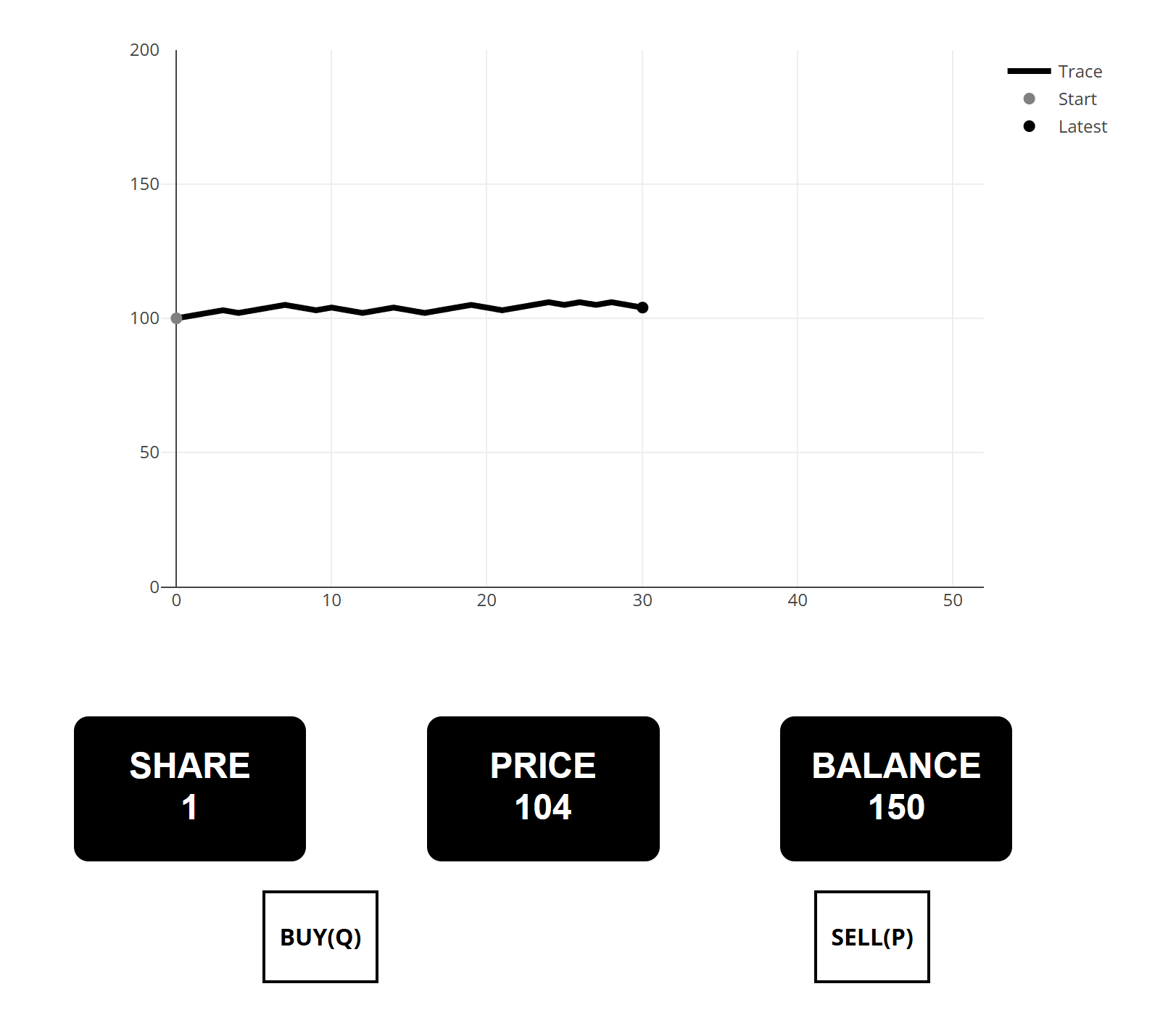
Demo: Real-time Trading Game
In this task, you take the role of a trader. You start a trial with either some shares or some funds. At any time point, you can either sell all your shares or purchase as many shares as possible using your funds.
The trial ends at a fixed time point, and your performance is measured by the difference between the value of your account at the beginning and the end of the trial (just like a real trader!).
(Quasi-)UX Research Project: Does a Graph Worth a Thousand Words?
As a researcher, I study investor behaviour, especially investment decision-making, using laboratory experiments. Many real-life investors base their decisions on stock price charts, which is the most common graphical representation of financial data. Yahoo Finance, Bloomberg, Investing.com, Stocks (by iOS)...you can easily find various stock price charts on these most popular financial platforms. People say "a picture is worth a thousand words", but is this always true?
In this research project, I conducted online experiments to investigate the role of graphical representations in investor decision-making. I found that graphical representations can lead to significantly stronger regret, which results in systematically slower decisions.

UX Research Project: Cavalry Bank
I moved to UK 5 years ago (in the middle of the Covid!) as an international student. I tried to open a UK bank account, and it was then when I first noticed that the banking system can vary significantly across different countries and cultures.
Learning, working or residing in a new country becomes increasingly common in the past decade, and people usually need a local bank account for their daily expenses. This reveals a huge potential market but also requires the banks to reshape their user experience.
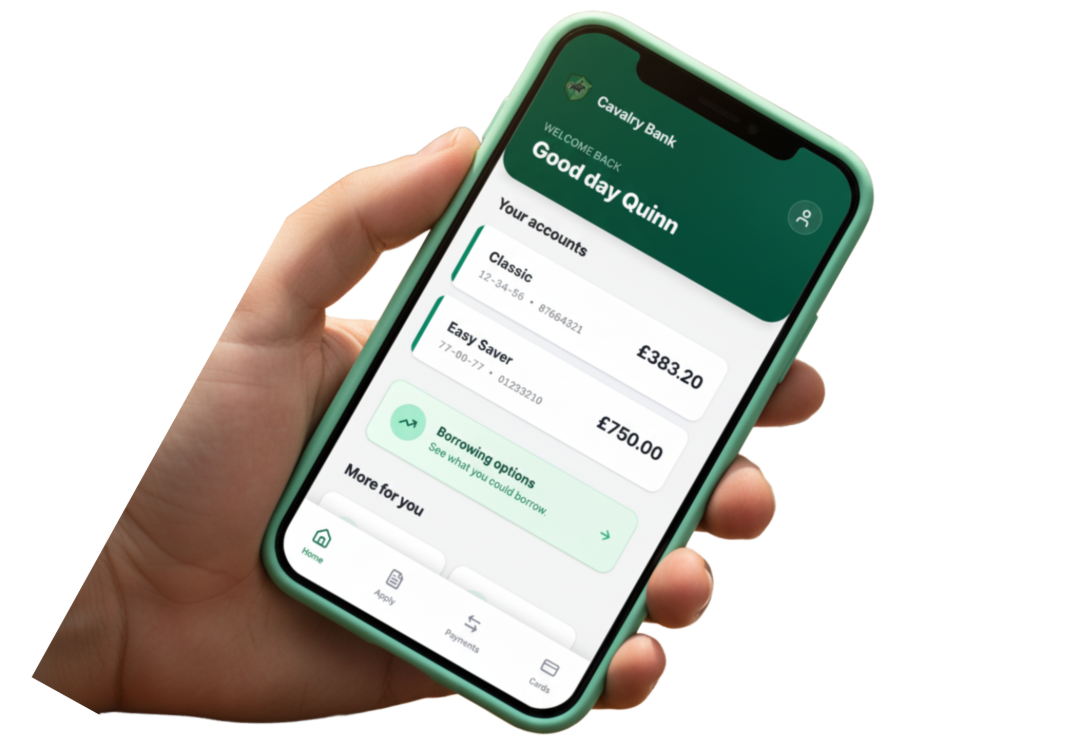
In this UX Research project, I conduct UX research on Cavalry Bank, an artificial bank based on a leading commercial bank in the UK. With usability tests and prototyping, I try to figure out how to improve the user experience of mobile banking apps. More broadly, how to make users with various cultural backgrounds feel comfortable and confident when using an App.
About me
Beyond my research, I am a curious explorer of the world. I am always eager to experience something new.- I am a big fan of hiking and travelling, always seeking new adventures in the great outdoors. Have been to Cornwall for hiking alongside the sea in winter, definitely a bad idea :(
- I also play video games and am especially crazy about 4X strategy games (Sid Meier's Civilization, Total War series, Crusader Kings, etc.) as they are all about DECISION-MAKING, just like my PhD, ha ha ha.
- I have a great passion for cooking and baking. I am always trying out new recipes from different cultures, as it seems to be much more rewarding than doing research (not just kidding!) Also, my favourite dish is a popular cuisine from my hometown, 锅包肉|Guo-bao-Rou (a sweet and sour pork dish with an amazingly crispy texture). Have tried making it myself quite a few times but it didn't turn out quite right.
- I am also interested in different languages, I personally believe that learning new languages is always the best way of understanding different cultures. I speak Mandarin (native), English, and a tiny little bit of Japanese and German, but too shy to practice them. Tried to learn more from Duolingo for a while, and hopefully will be fluent someday.